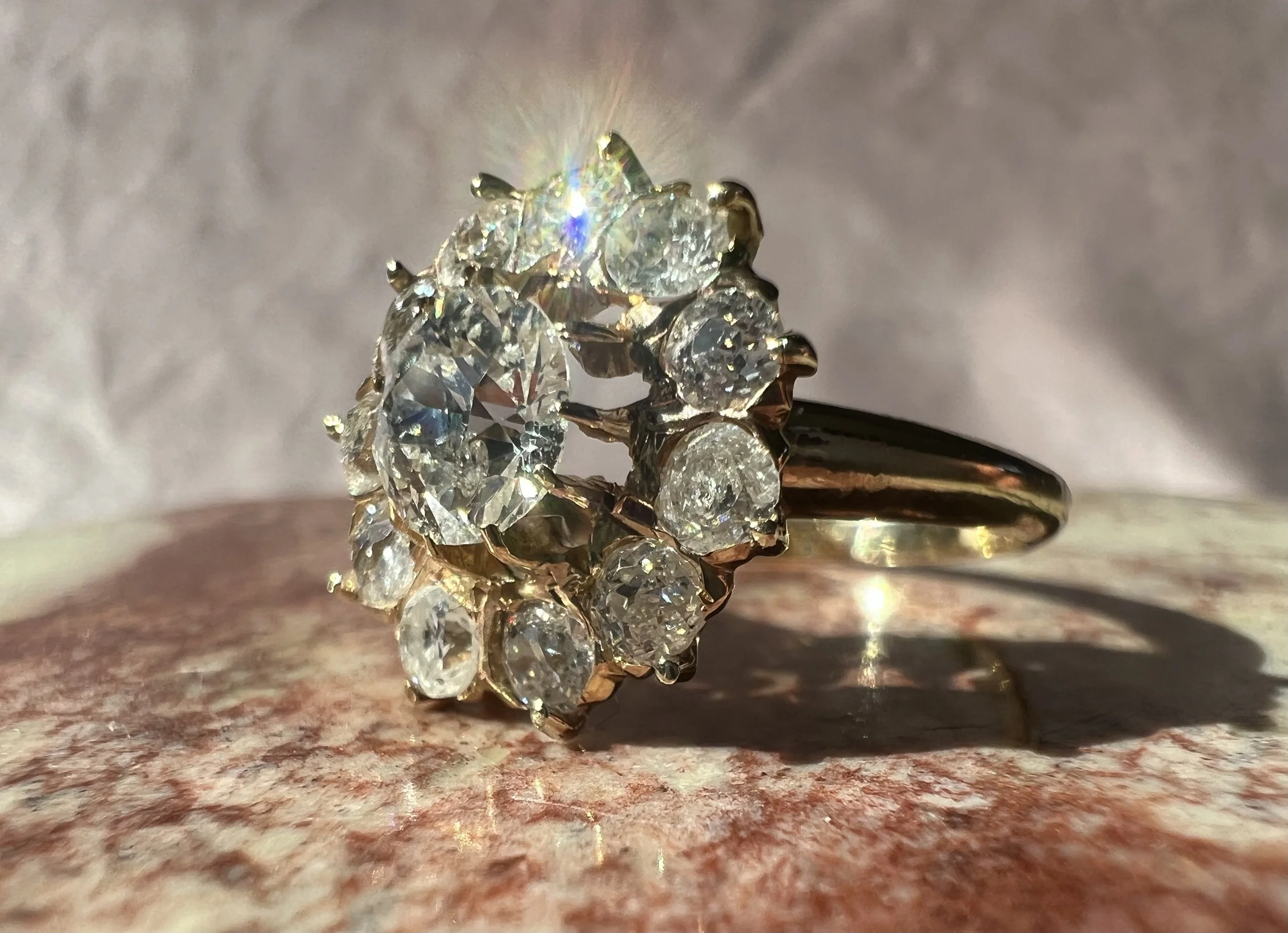
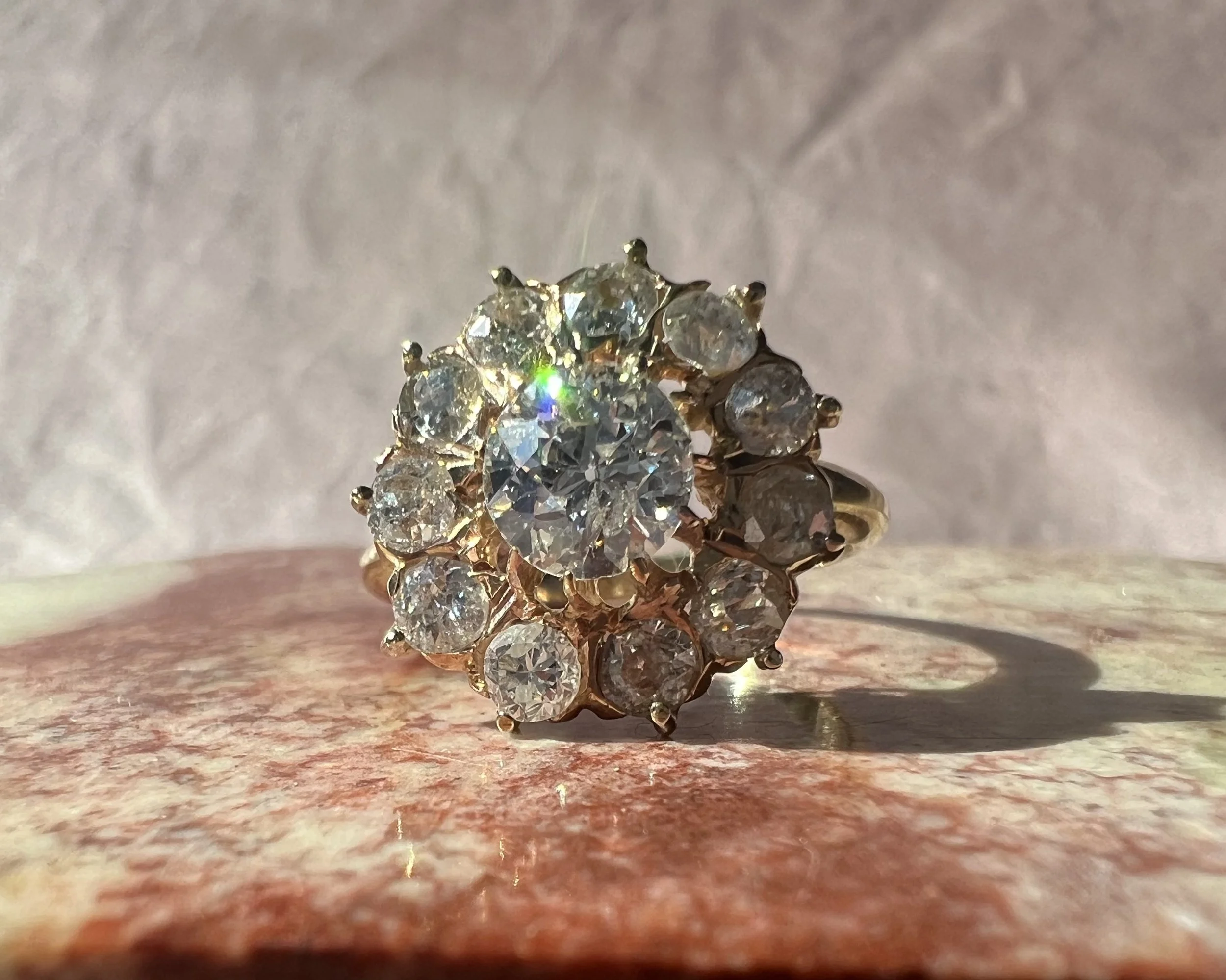
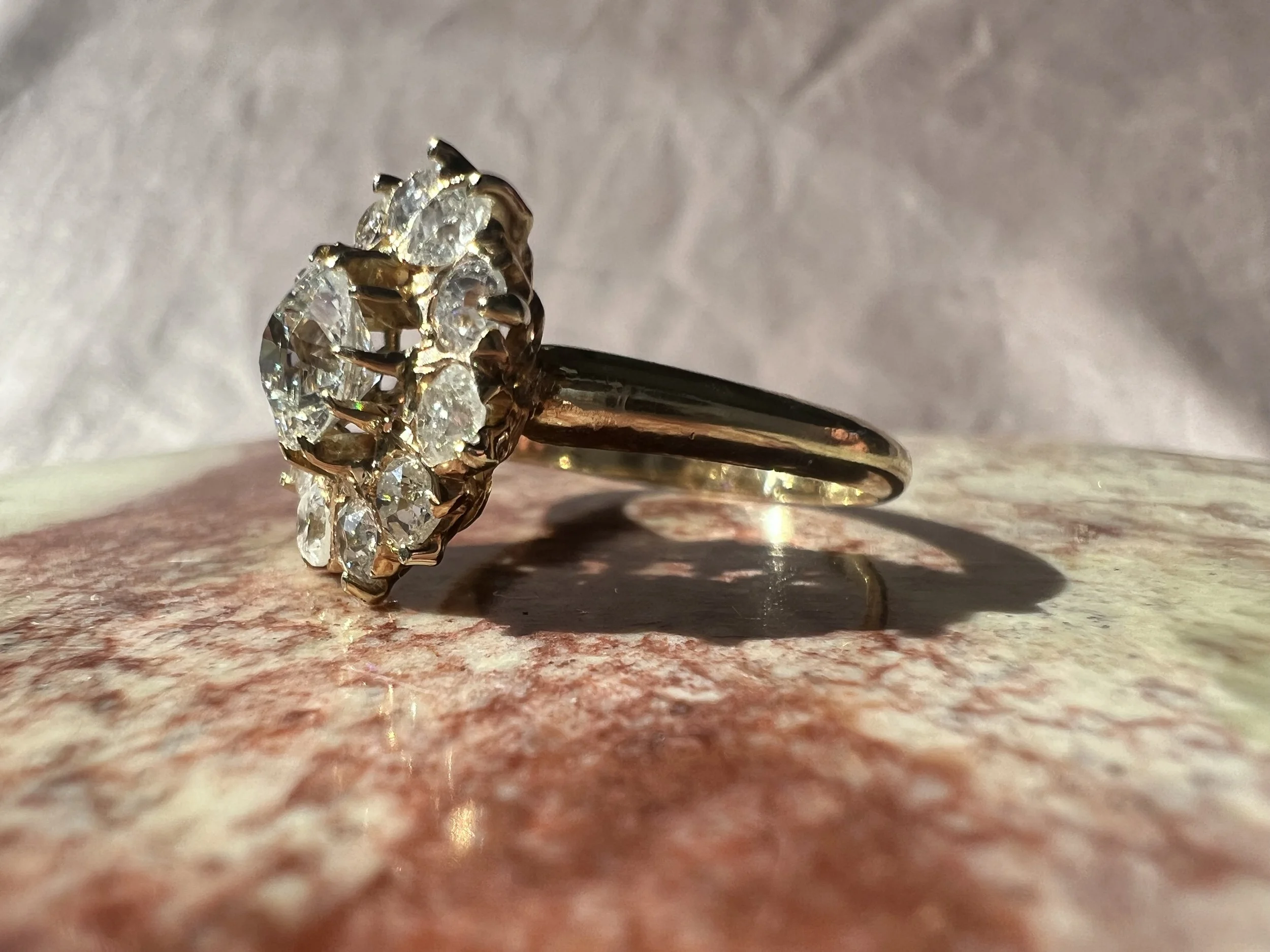
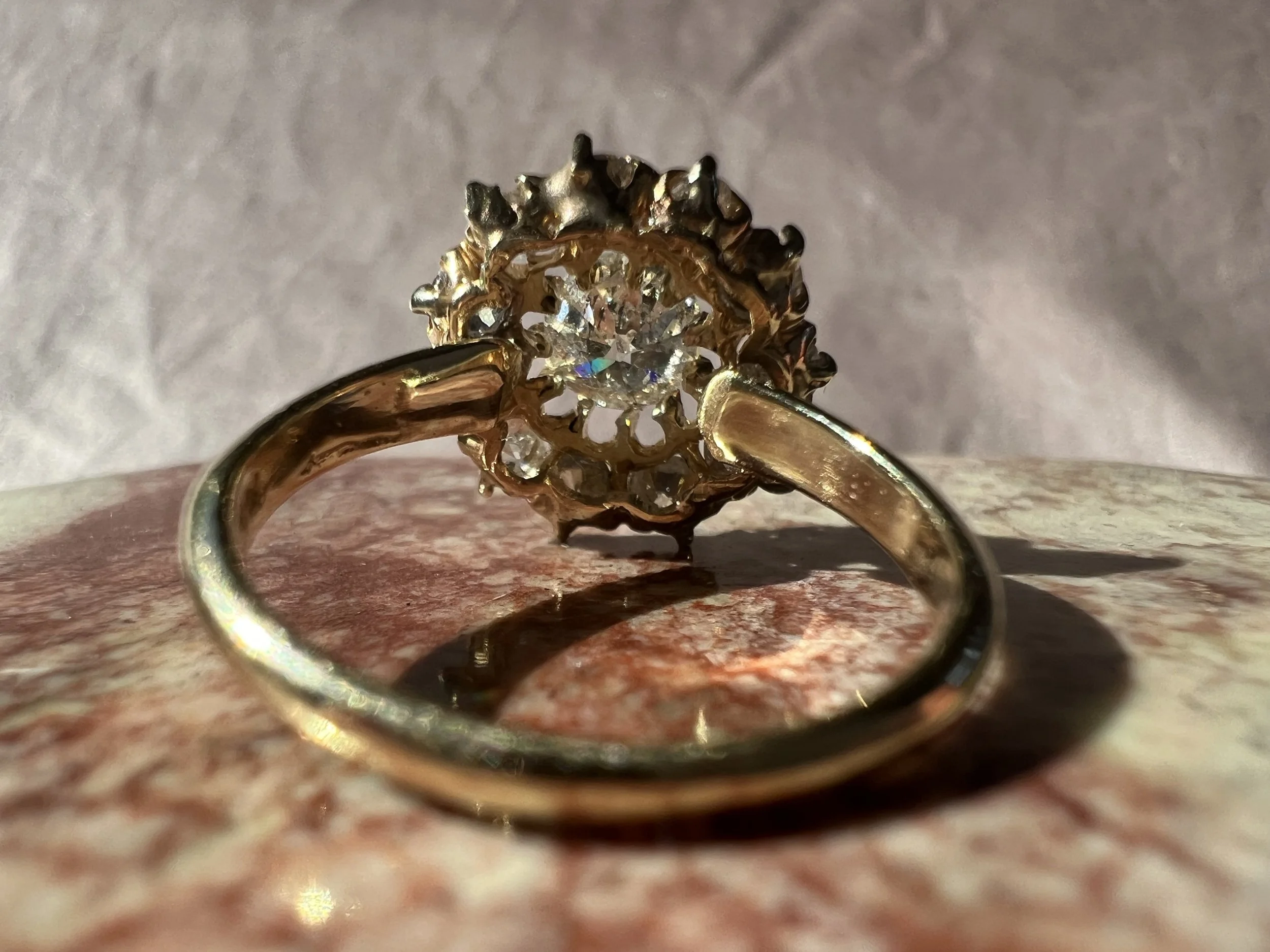
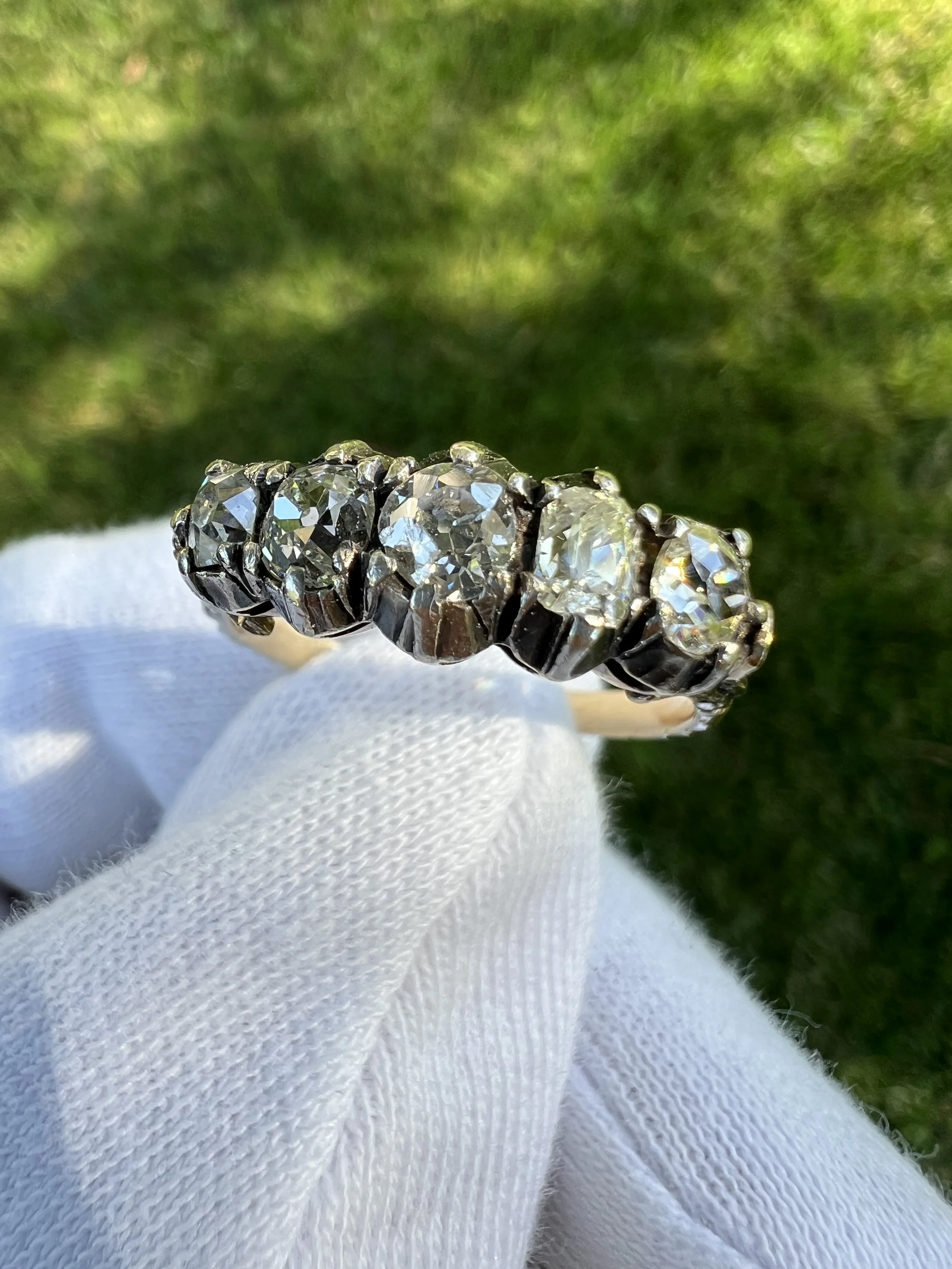
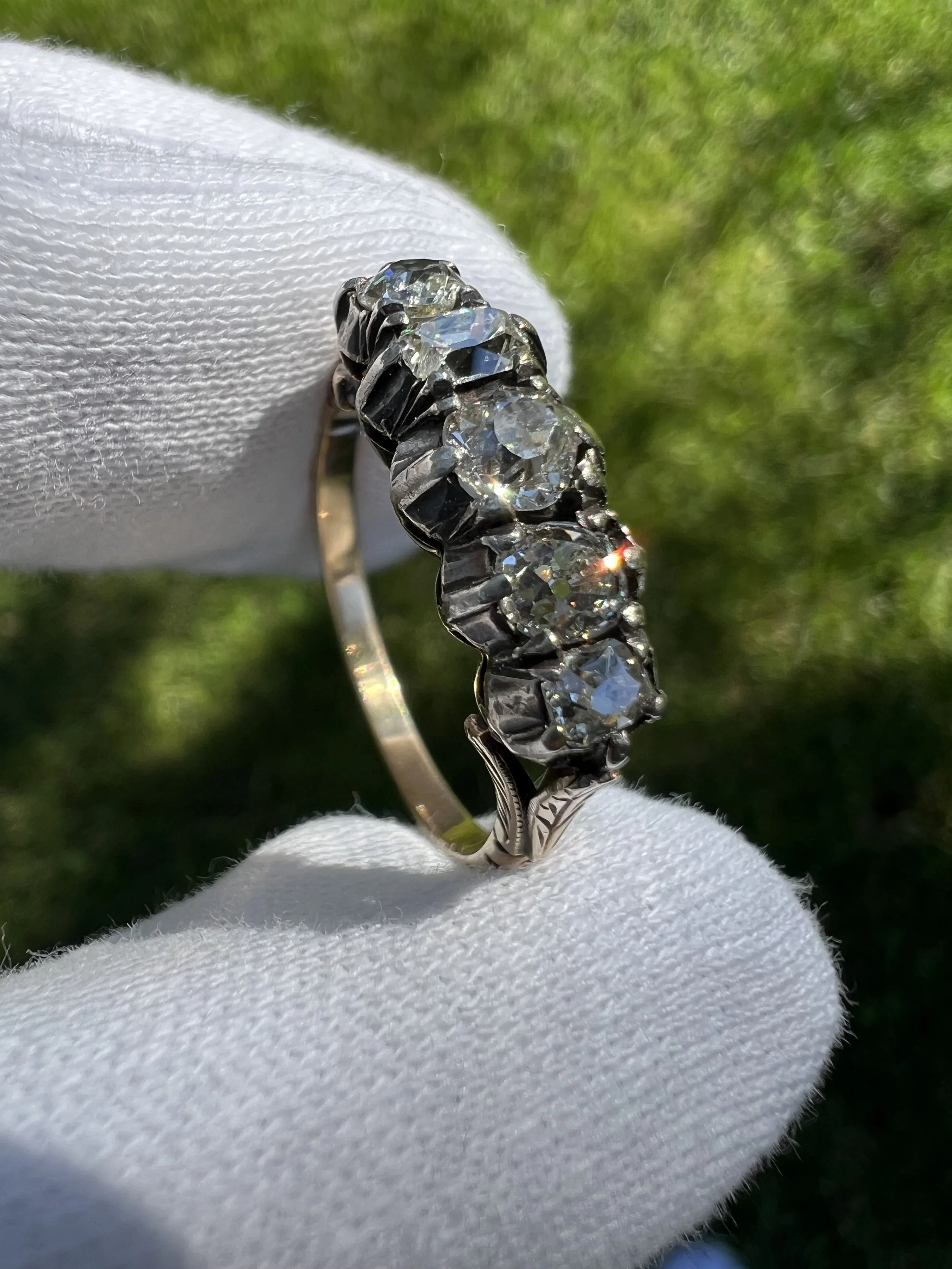
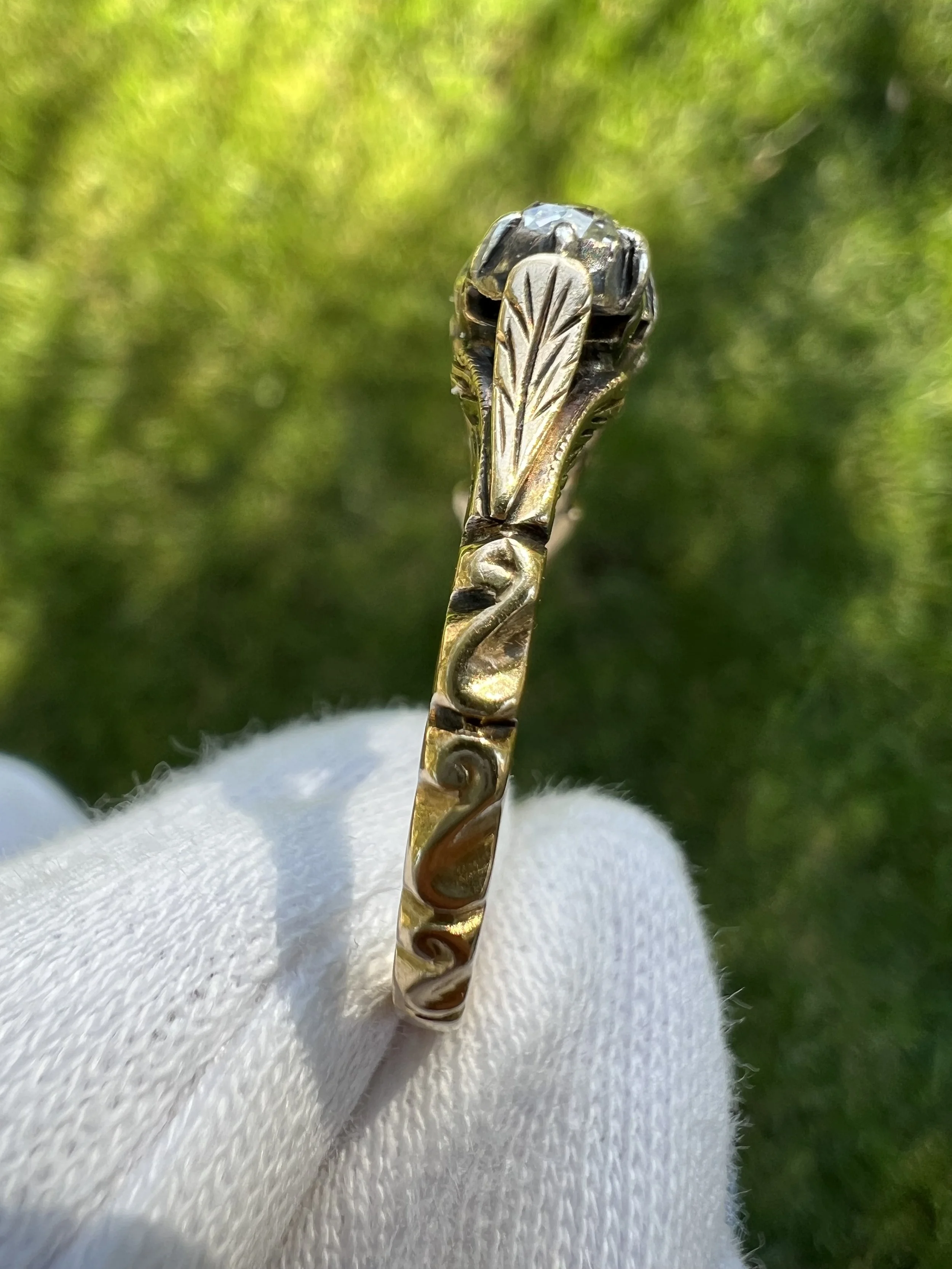
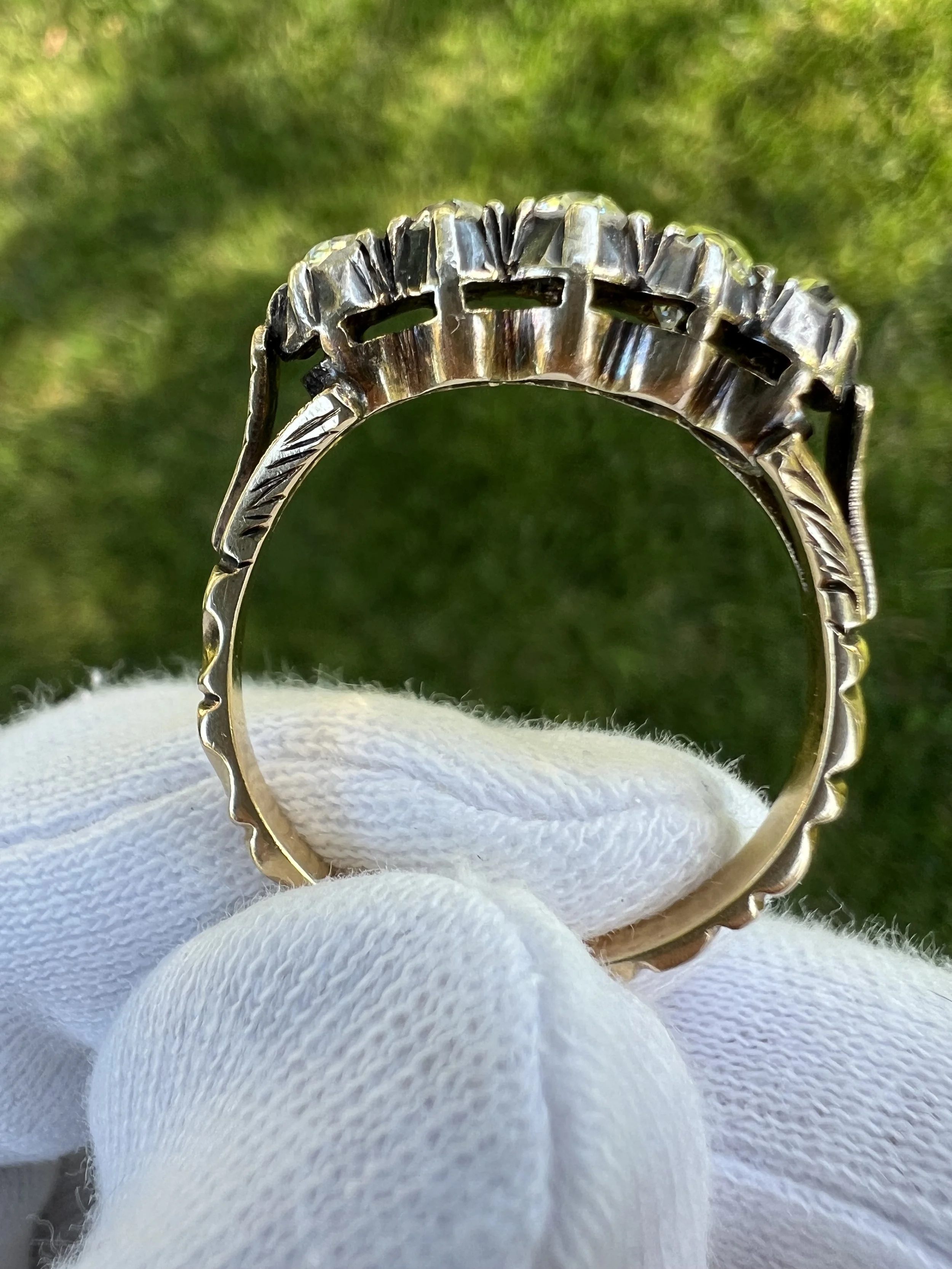
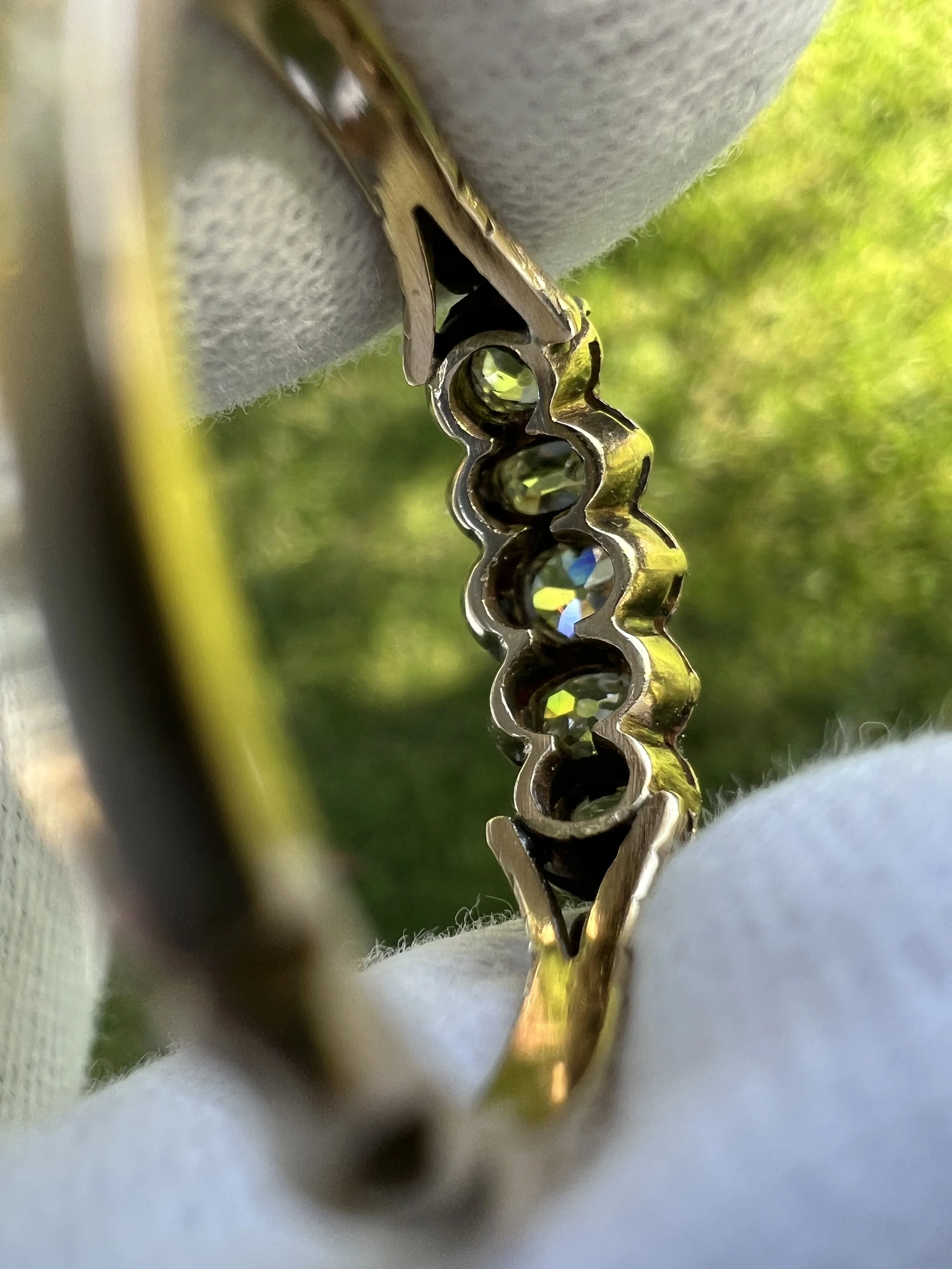
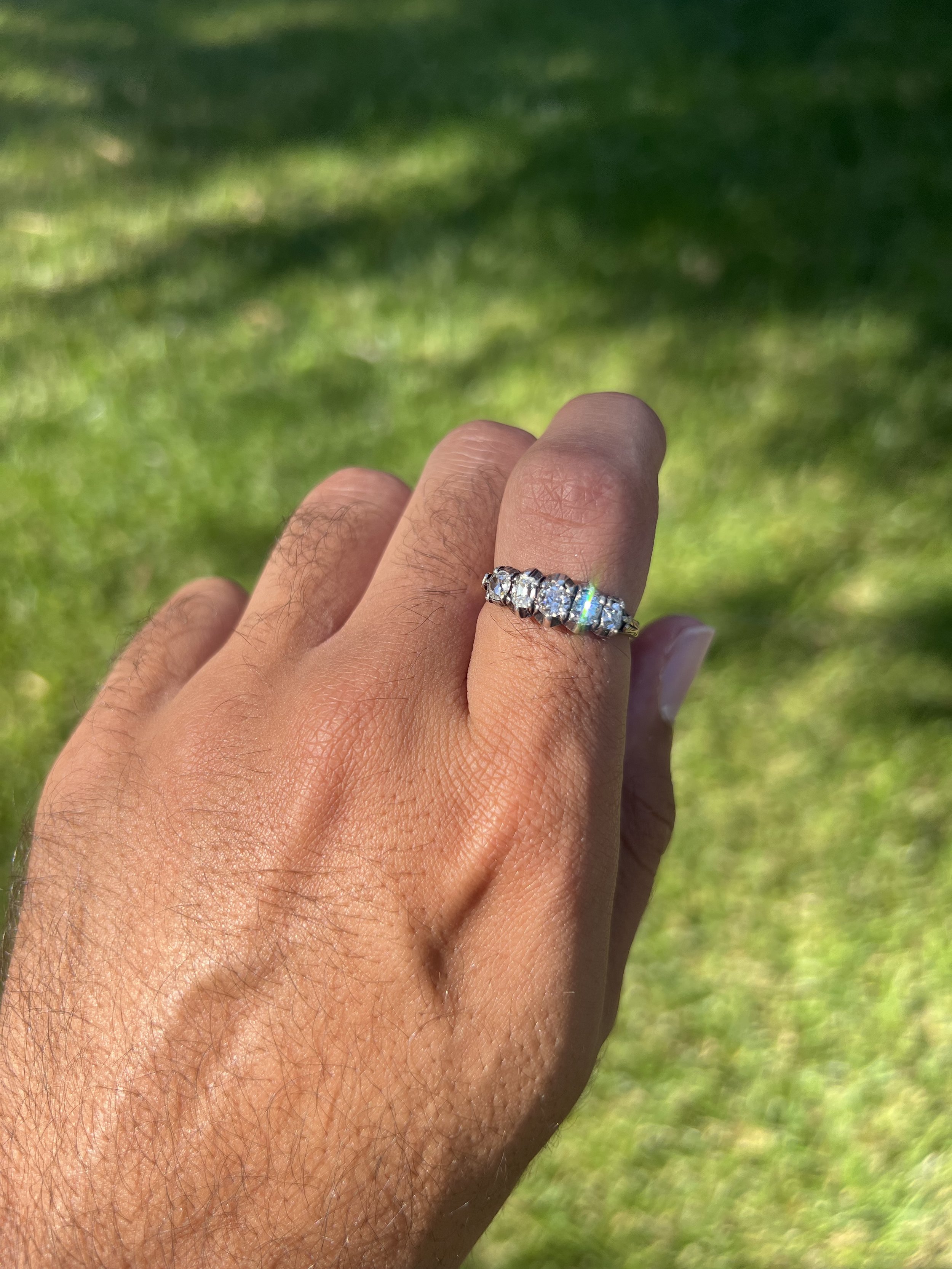
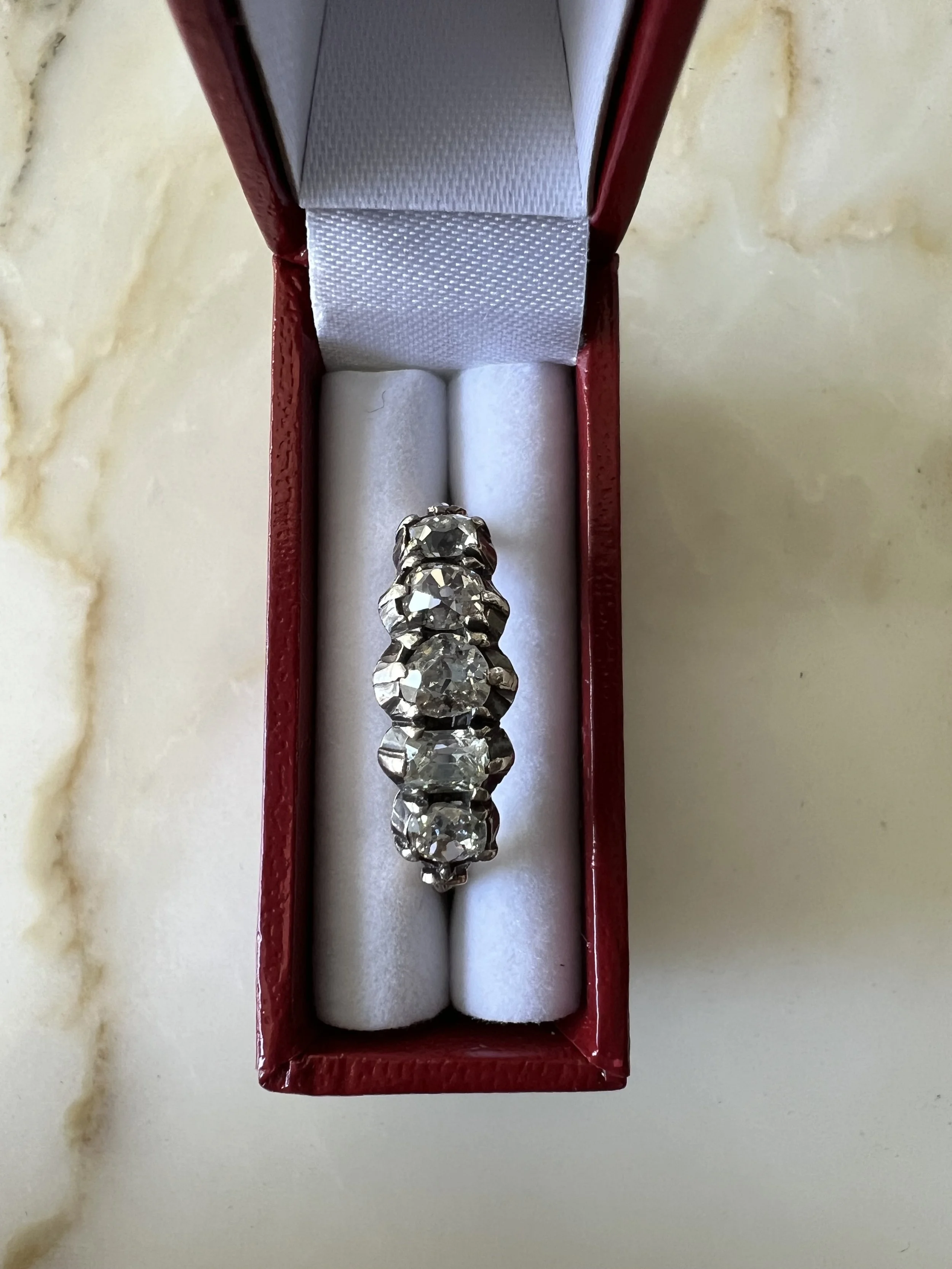
This piece has to be one of my favorite pieces that I have had the pleasure of possessing. It is a piece unique, a true one of one. The ring is Georgian, handmade, around 1820 in England.
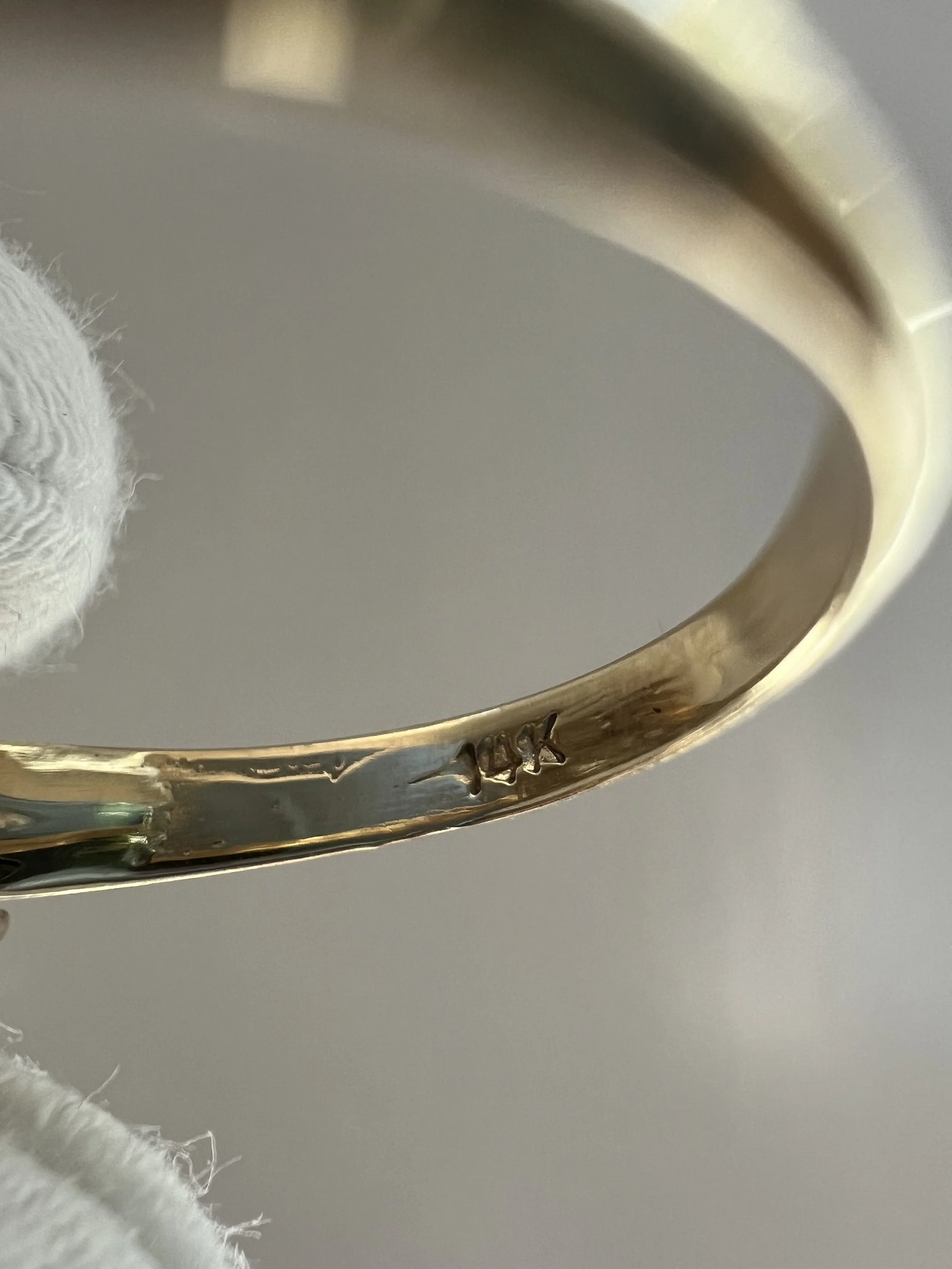
The center stone is a pinkish-purple rubellite (aka Tourmaline) that is about 1.5-2cts. The saturation is vivid and is enhanced by its collet closed-back setting. On the outer edge, there are (6) 3mm × 3mm vivid green emeralds. Dating the emeralds, they are Colombian as the Zambian Emerald source was not found over a century and half later. Above each emerald, are (6) small natural pearls that are about 2mm each. On the outer edge, there are an additional (6) larger natural pearls that are (5)mm each. The gold is 18k pink gold and the weight is 7.9 grams. There is a hand-etching of the number ‘236’ on the underside of the main component, likely representing a serial/production number.
It is important to mention that natural pearls does not just mean ‘real’. In a gemological sense, a natural pearl is an uncultured pearl. Culturing aka farming of pearls was invented by Mikimoto in the 1890’s. All pearls today in a retail setting are cultured, whether they are a $100 strand of freshwater pearls or a $10,000 strand of Akoya saltwater pearls from Mikimoto. Wild-caught fine pearls are therfore very rare and are only seen in antique jewelery from the mid-victorian period and before.
Because the ring is Georgian, you can see how it was composed. There are 3 main components. Each of the stones have a custom gold collet setting with the exception of the smaller pearls. The smaller pearls are kept in place via pave prongs. All of the collet settings are then fused to the main gold component. On the outer underside of the main component, there are hand-engraved starburst lines which was a very common detail during the Georgian period. Finally, the shank was custom created in the shape of a trident and was soldered to the main component.
As an added bonus, the antique Victorian purple ring box is included.


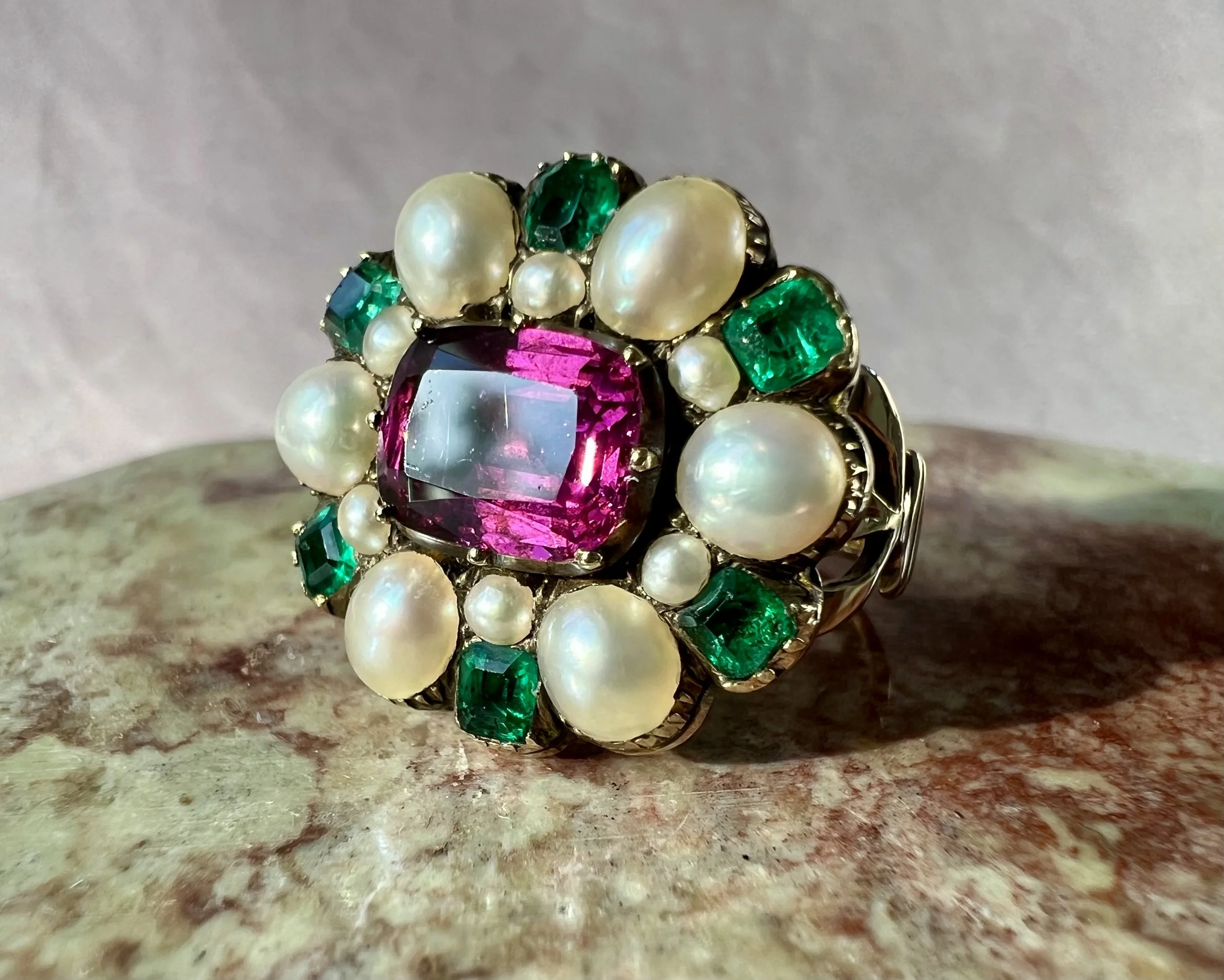 Image 1 of 8
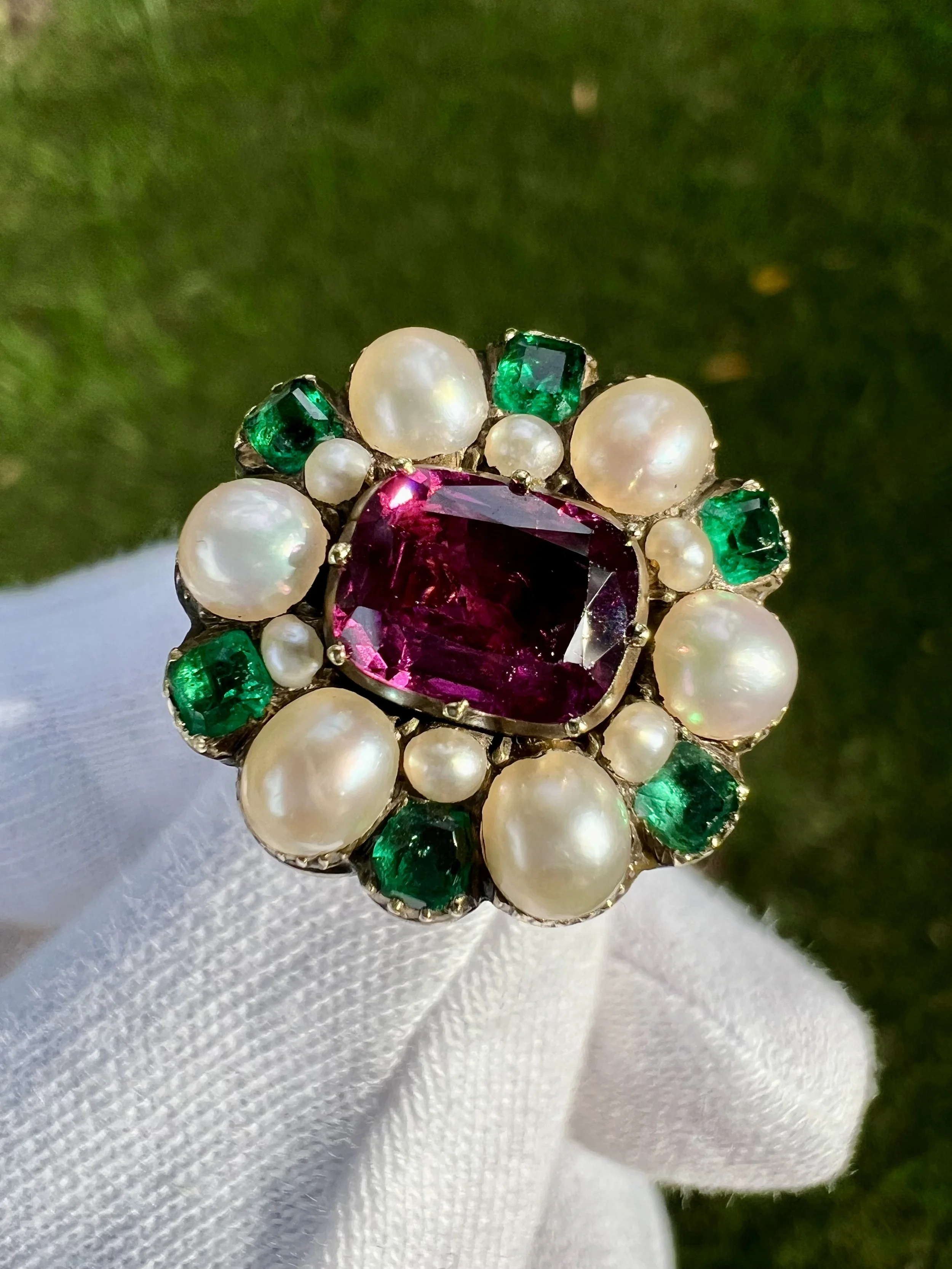 Image 2 of 8
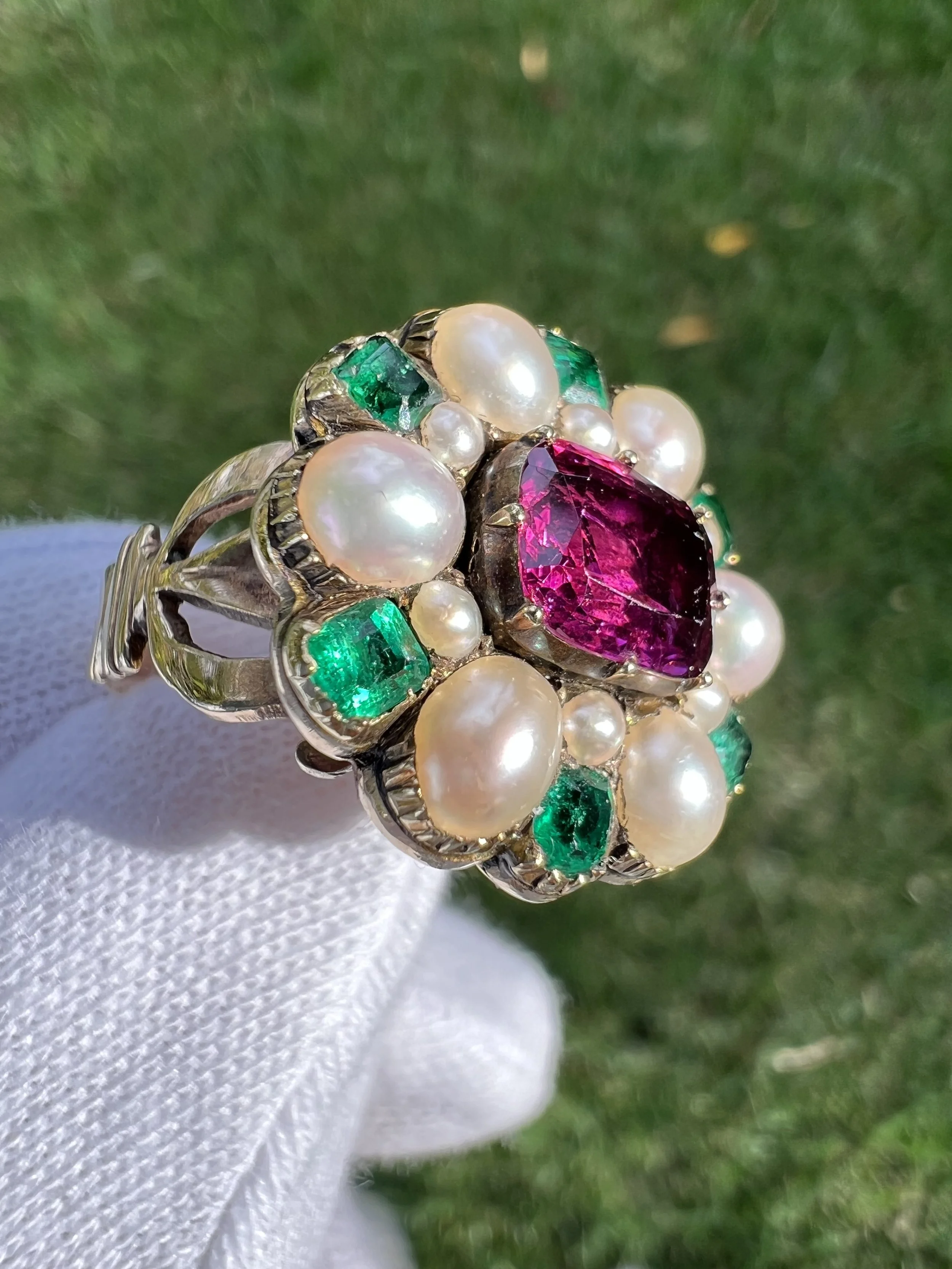 Image 3 of 8
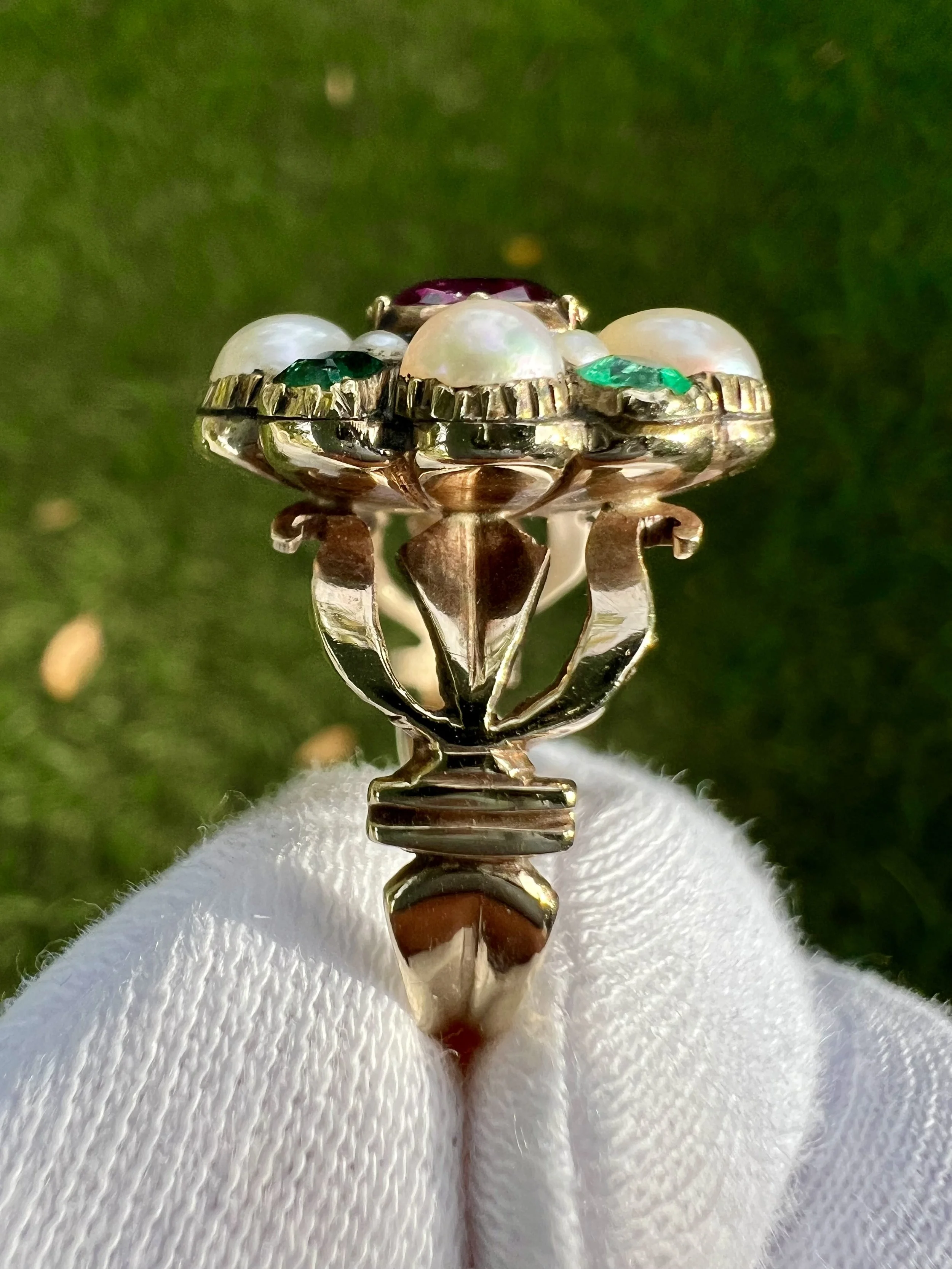 Image 4 of 8
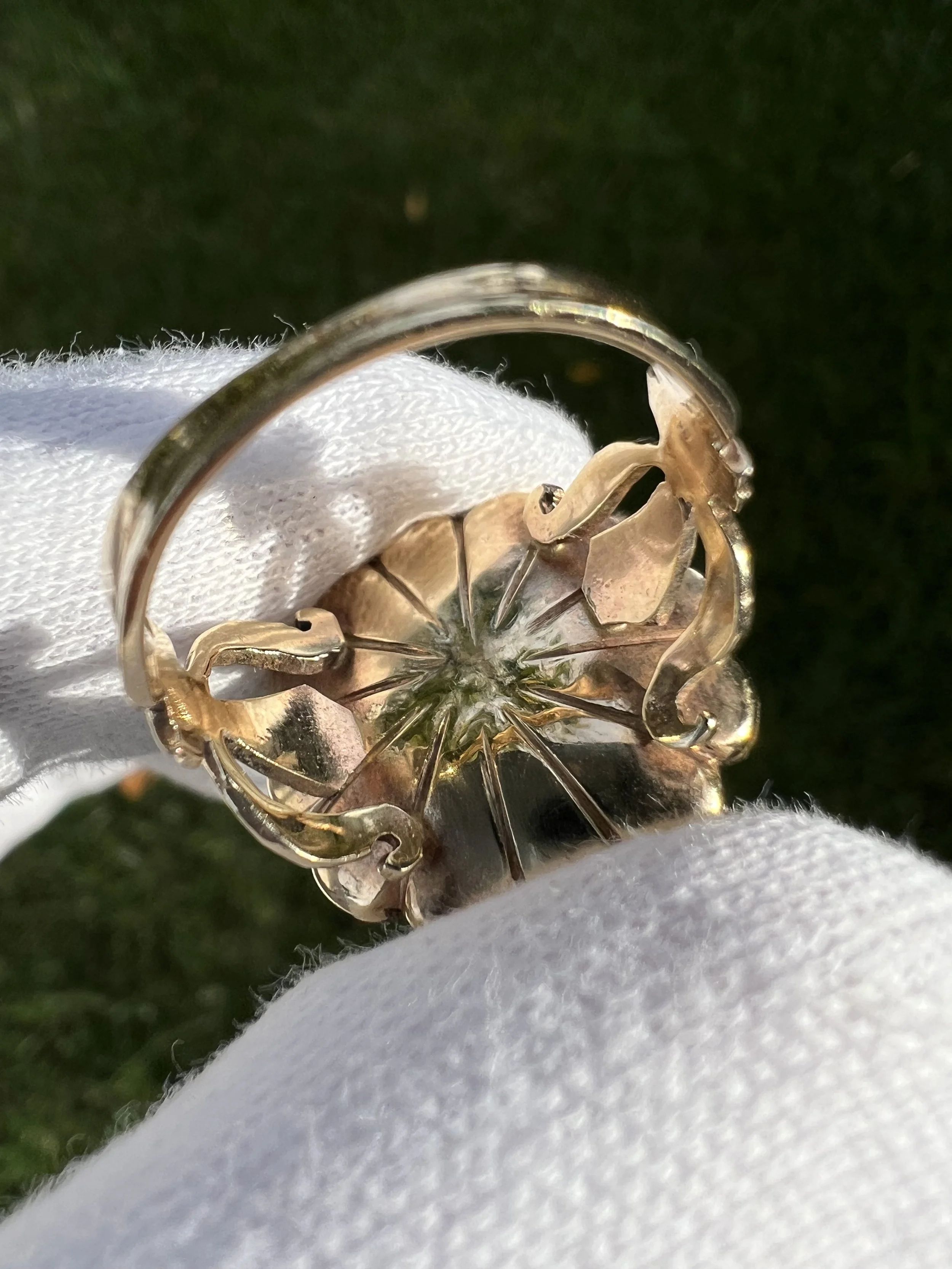 Image 5 of 8
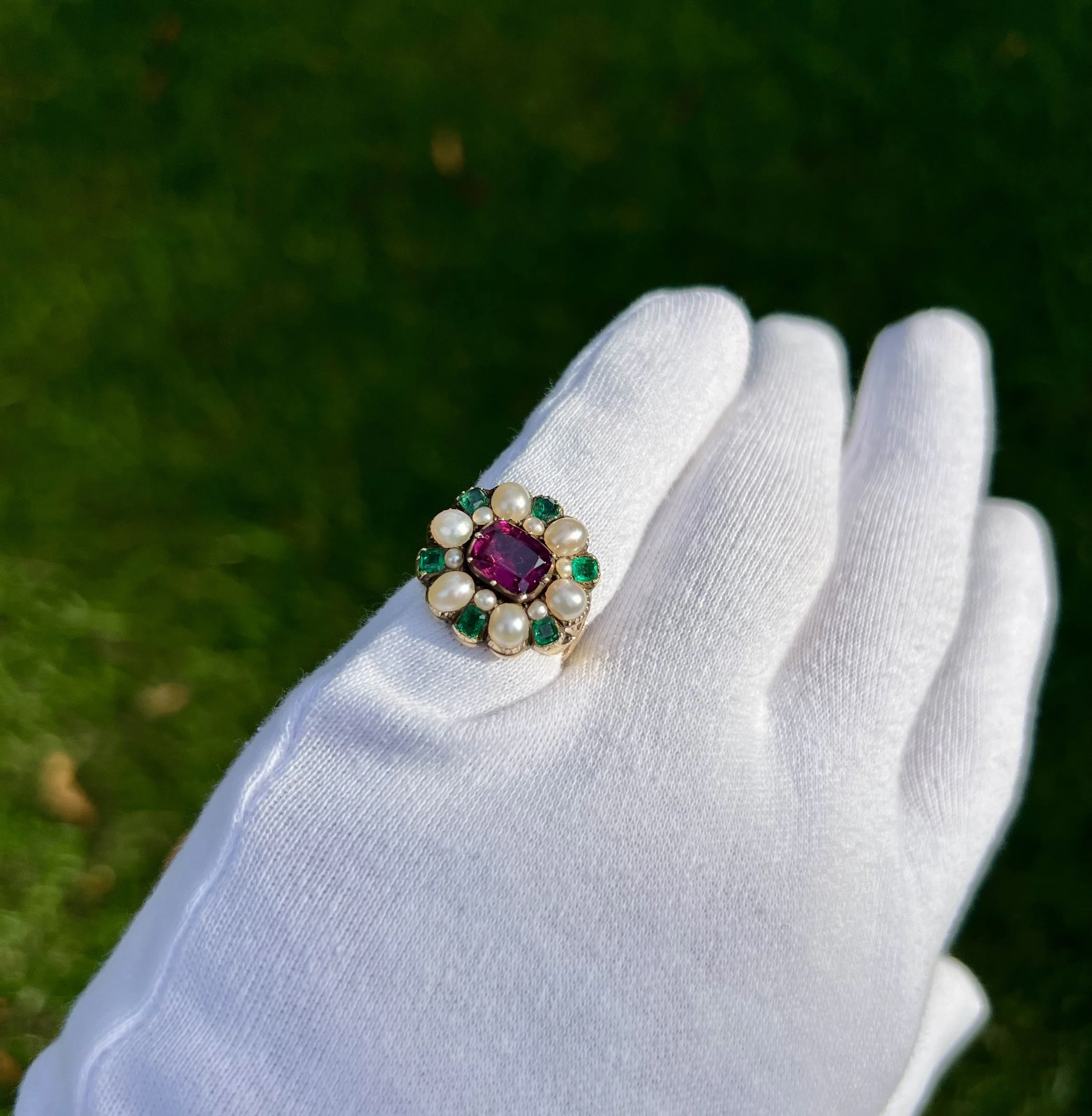 Image 6 of 8
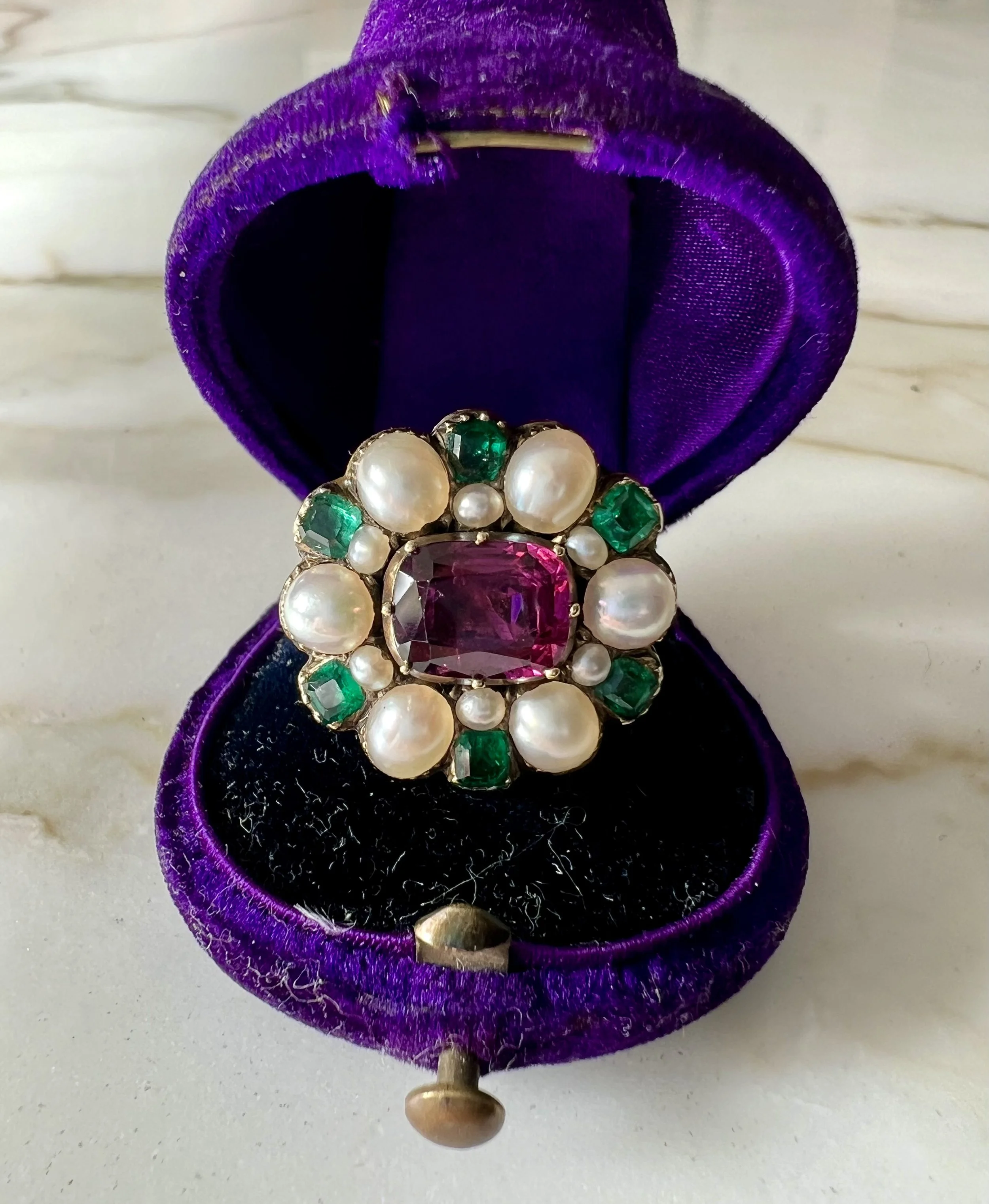 Image 7 of 8
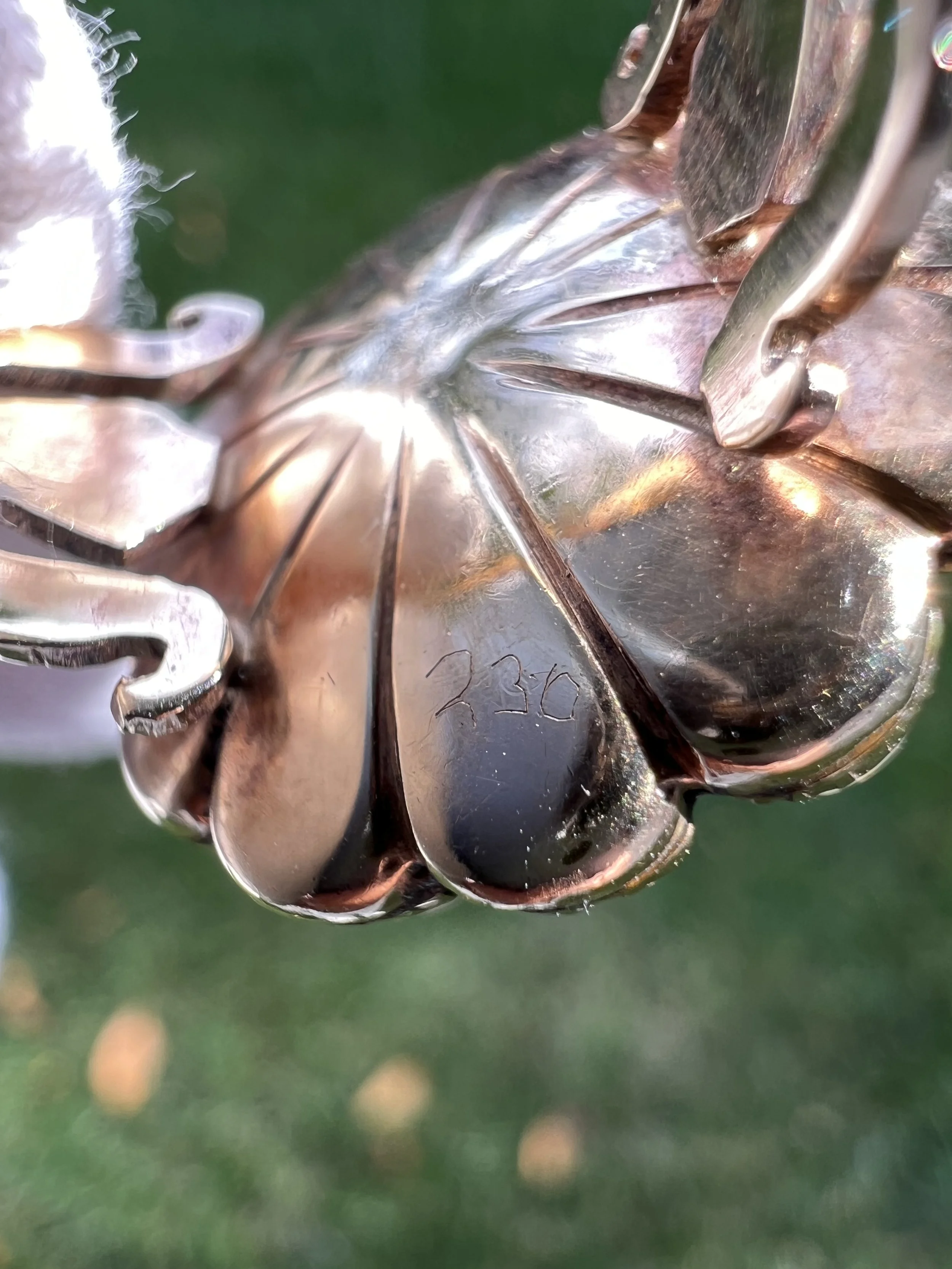 Image 8 of 8